


Understanding Persistence Meters in Modern Slots: How “Holdover” Features Change the Way We Play

Recommended casinos
Persistence meters—sometimes called holdovers, collectors, or accumulators—have quietly become one of the most influential mechanics in modern online slots. And as players, we feel the difference instantly. These systems create a sense of progression that carries over from spin to spin, and they change how we think about timing, bet sizing, risk management, and—even more interestingly—when we should walk away.
In this article, we’ll break down how these features work, why they matter, and how they genuinely transform slot strategy in 2025’s online gaming landscape. Our goal is simple: offer a clear, practical explanation in friendly, everyday language so we can all make smarter, more confident choices when persistence shows up on the reels.
What Exactly Are Persistence Meters and Holdovers?
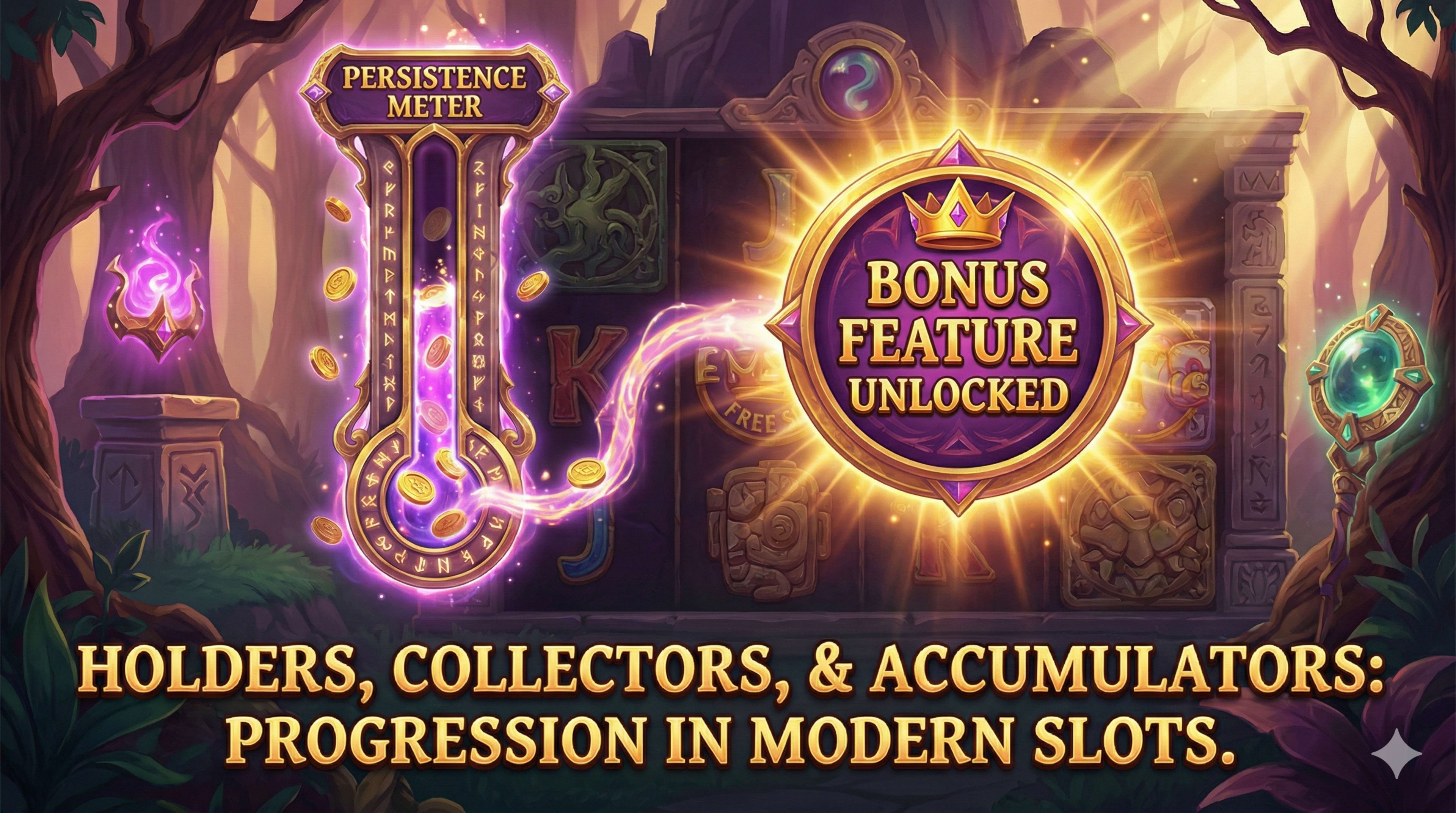
Persistence meters are features that save progress between spins. Unlike classic slots where each spin is isolated, persistence mechanics allow us to build toward something—whether that’s filling a meter, charging an orb, collecting tokens, or unlocking modifiers.
These systems appear in multiple forms:
- Collectors: Gather symbols over time until a feature triggers.
- Charge-Up Meters: Fill progressively to activate wilds, multipliers, or a special mode.
- Holdover Enhancements: Sticky elements that remain active for several spins or until a threshold is reached.
- “Near Bonus” Trackers: Bars that reset only after hitting a bonus round or a forced cycle limit.
What makes holdover mechanics special is that they add continuity. We’re not just spinning; we’re building toward something. And that’s a massive shift from the old model of pure randomness per spin.
Why Game Studios Use Persistence Mechanics Now
Over the last few years, online slot design has moved toward deeper experiences rather than simple one-shot spins. Persistence features became popular for a few reasons:
- Player Engagement: Building something over time feels rewarding.
- Session Depth: We tend to stay longer when we see progression.
- Feature Predictability: They introduce short-term goals that feel attainable.
- Clearer Expectations: Meters make us feel like we understand the game better—even though outcomes remain mathematically controlled.
- Broader Appeal: Casual players love visible progress; experienced players use it to read volatility cycles.
This shift is part of a wider trend toward “eventful gameplay”—frequent small moments that lead into bigger ones. Persistence meters are the perfect tool for that.
How Persistence Meters Affect Volatility and RTP
Most of the time, persistence mechanics appear in medium- to high-volatility games. The reasons are straightforward:
- Progression systems create streaky gameplay.
- Features with build-ups need stronger peak wins to balance out extended dry periods.
- The meter itself doesn’t change the long-term RTP—it changes how that RTP is distributed across sessions.
We’ve seen this pattern across many holdover-based games: RTP tends to sit between 95% and 96.5%, but the distribution of wins becomes spikier because the game is built around hitting meaningful thresholds.
Types of Holdover Features (Explained Simply)
Here’s a clean table summarizing the most common persistence systems:
| Type of Persistence | How It Works | What It Changes for Players |
|---|---|---|
| Symbol Collectors | Gather tokens/symbols until a feature triggers | Encourages staying until the next milestone |
| Charge Bars / Orbs | Fill over spins to activate modifiers | Makes timing and game rhythm more important |
| Sticky Enhancements | Upgrades hold for several spins | Increases value during hot streaks |
| Multi-Level Meters | Unlock stages with escalating rewards | Creates long-form session progression |
| Cycle-Based Bonuses | Bonuses forced every X spins or fills | Adds predictable pacing into volatile games |
This table is intentionally simple—because players don’t need jargon. We need clarity.
How These Features Actually Change Our Strategy
Let’s talk about what we all wonder when a meter starts filling up:
Should we keep spinning or walk away?
Holdover systems make this decision emotional, but with experience—and simple logic—we can approach them more rationally.
1. Progress = Investment, but Not Guaranteed Value
Seeing a meter 80% full feels like value, but persistence progress isn’t stored equity.
It’s a stored chance.
The game doesn’t owe us anything for filling a meter. It only increases the likelihood of triggering something soon. We’re investing spins, not receiving credit.
2. The “Trigger Probability Spike” Moment
Most games with collectors or charge bars have a clear tension point—when the next few spins suddenly feel more valuable.
For example:
- The last symbol needed to fill a feature
- The final segment of a charge orb
- A “super close” bonus tracker
These spikes cause us to extend sessions even if we planned to stop earlier. Recognizing this emotional pull helps keep our decisions grounded.
3. Short Sessions vs. Long Sessions
Persistence mechanics reward two major playstyles:
- Short targeted sessions: We log in, push a meter to the next event, and leave after it triggers.
- Long progression-based sessions: We stay for the full build-up of multiple meters or cycles.
There’s no “best” choice—only what fits our rhythm. But being deliberate matters.
4. Bet Sizing Matters More Than Ever
When we’re near a bonus, raising the bet is tempting. But remember:
- The meter’s progress was built on your existing bet.
- The feature payout scale doesn’t adjust to your previous investment.
In most games, consistency beats chasing.
Where Holdovers Shine: Practical Examples of Their Impact
While we’re not naming specific titles, we all know the types: cluster slots with charge-up wild rounds, grid games with orb meters, and collector-based bonus builders.
These real patterns show how persistence impacts our play:
Example 1: The Slow-Burning Meter
Some game designers persist so that the final reward always feels “worth it” but rarely lands.
Result? We stay longer, but hit fewer meaningful spikes.
Example 2: The Multi-Stage Collector
Meter levels (1 → 2 → 3) give us incremental progress: small perks early, big rewards later.
Result? We enter a “progress loop” that encourages session continuation.
Example 3: The Timed Holdover
Enhancements that last for five spins create a mini “hot window.”
Result? We tend to increase bet size temporarily during this boost.
Example 4: The Persistent Symbol Upgrade
Some games carry symbol upgrades into bonus rounds, making the pre-bonus progression feel essential.
Result? Bonuses feel more personalized and more strategic.
The Hidden Psychological Side of Persistence Meters
We should talk honestly about the emotional side of holdovers. These features tap into well-known behavioral patterns:
- Completion bias: Once we start filling a meter, we want to finish it.
- Sunk-cost feeling: Past spins create a sense of “investment” that influences future decisions.
- Expectation building: A near-full meter looks like a guaranteed value—even though it isn’t.
- Session attachment: Progression makes us feel connected to “our” slot session.
Understanding these patterns doesn’t remove the excitement—but it helps us stay in control of our choices.
How to Approach Persistence Features Responsibly
Let’s be practical. Persistence mechanics can make us stay longer than planned if we’re not mindful. A few simple habits keep the experience healthy:
1. Set a clear exit condition before you start
Examples:
- “I’ll play until the next feature triggers.”
- “I’ll leave if the meter doesn’t move after 20 spins.”
- “I’ll exit at +25% or −25% balance.”
2. Treat progress as a bonus, not a promise
Meters don’t guarantee profit—they provide structure and pacing.
3. Avoid chasing the final 10%
This is where sessions often spiral. The last 10% can take five spins—or fifty.
4. Keep bet size steady
Consistency builds safer, more predictable sessions with holdovers.
5. Enjoy progression, but don’t rely on it
Persistence is a feature, not a strategy.
Why Holdover Features Are Here to Stay
The future of online slots is leaning heavily toward deeper, layered mechanics—and persistence systems perfectly match this direction.
Here’s why studios will keep using them:
- They create emotional engagement without complexity.
- They make each session feel like a journey, not just a series of spins.
- They support a wide range of volatility levels.
- They can be combined with free spins, multipliers, symbol upgrades, and cluster charges.
- They keep casual players entertained and offer strategic appeal to more experienced players.
We can expect even more hybrid styles soon—multi-game persistence, account-level progression, or persistent unlock trees across a series.
So… What’s the Best Way to Play Persistence Slots?
There’s no “perfect” approach. But after analyzing dozens of modern titles and playing them ourselves, here’s the balanced takeaway:
Persistence meters make slots more strategic, more exciting, and more engaging—but the core math never changes. Our best strategy is to enjoy the progression while staying aware of our limits, our session goals, and the emotional pull these mechanics create.
The real power of holdover systems is the experience they offer:
- A sense of buildup
- A reason to stay focused
- Small milestones that make the gameplay feel more meaningful
When we play with awareness, these features add fun depth—without pulling us into unwanted marathon sessions or risky bet changes.